Neo4j on 2025 AI Scalability: Connected Data Wins

TL;DR: Neo4j’s read on 2025 AI scalability is blunt: enterprise AI accuracy and value plateau without connected data. Bigger models and more documents are not enough. Neo4j argues the deciding factor is graph structure, a knowledge layer that gives AI the relationships and context it needs to reason. The same principle applies to internal tools: connect your knowledge first, and AI search and agents get measurably better.
Most AI projects do not stall because the model is weak. They stall because the model is reasoning over a flat pile of text with no idea how anything connects. Neo4j made that the through-line of its 2025 review, arguing the industry hit a turning point where “data accumulation and management” stopped being enough (Neo4j, 2026). This piece pulls out what Neo4j’s case on 2025 AI scalability and connected data actually means, and where the graph argument holds up.
Why does Neo4j say AI scalability depends on connected data?
Neo4j’s core claim is that AI has to move past the data layer and onto a knowledge layer. A data layer stores and manages information. A knowledge layer adds the connections and meaning on top, so systems can reason over how things relate.
The reasoning is straightforward. A language model handed a thousand disconnected documents can retrieve passages, but it cannot reliably follow a chain: this customer owns that account, which sits under that contract, which has this exception. Those are relationships, and relationships are exactly what a graph stores natively. Neo4j puts it directly: for AI to go “from experimental to essential, it requires more than just raw information, it requires context, relationships, and reasoning” (Neo4j, 2026).
That is the scalability argument underneath the marketing. Accuracy does not fall apart on easy questions. It falls apart on multi-step questions, the ones where the answer depends on how five entities connect. Without structure, that is where AI plateaus.
What changed for Neo4j in 2025?
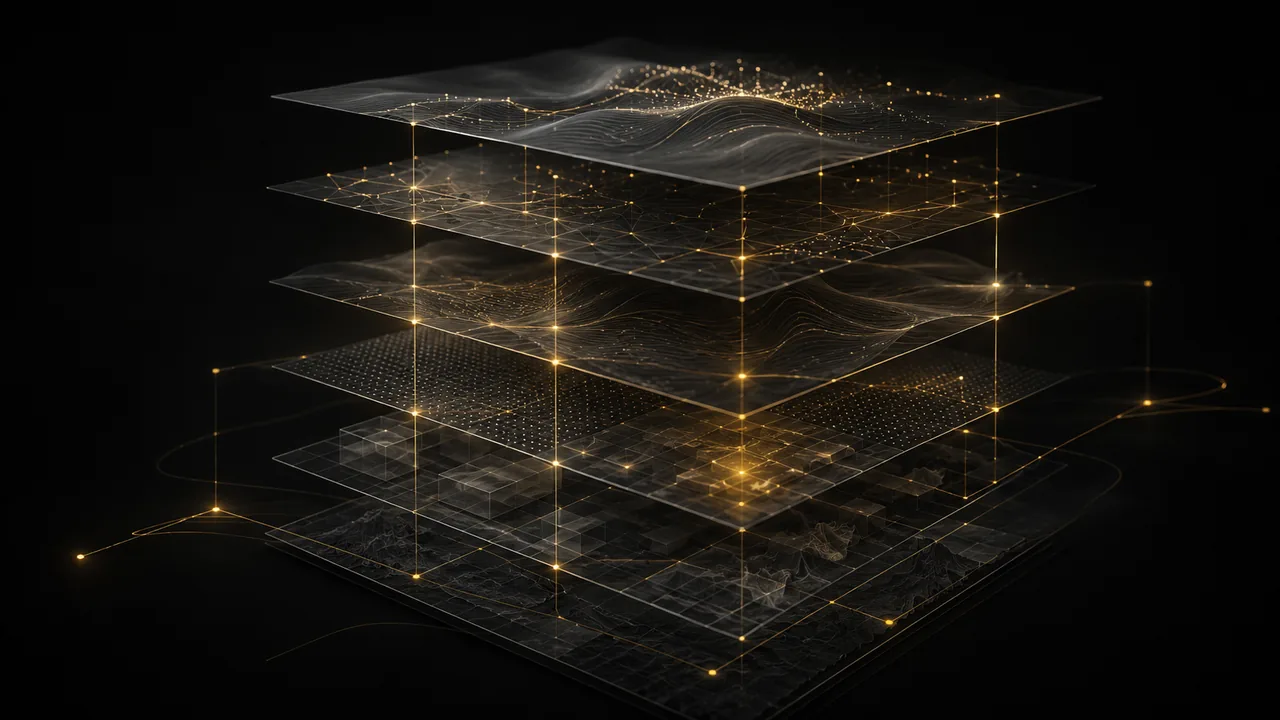
Neo4j repositioned from a graph database into what it calls a graph intelligence platform, built in three tiers (Neo4j, 2026):
- Database and graph algorithms at the base, with 65+ production-ready algorithms.
- AI-powered graph tools in the middle, to turn fragmented documents and tables into navigable graphs.
- A Graph AI layer on top, the reasoning engine for agents.
The scalability proof points are concrete. Neo4j introduced Infinigraph, a distributed architecture for horizontal scale-out to 100TB and beyond, which it says runs without rewriting existing Cypher queries (Neo4j, 2026). Its managed service, AuraDB, now powers more than 30,000 databases globally (Neo4j, 2026). On the integration side, Neo4j reported 200+ joint customers using its connector to move data between Neo4j and Databricks to find graph insights hidden in tabular data (Neo4j, 2026).
The point of citing scale here is not the raw numbers. It is that the bottleneck Neo4j is solving for moved up the stack: from “can we store the data” to “can AI reason over it as it grows.”
GraphRAG and vectors in one place
A big part of the 2025 story is GraphRAG, retrieval-augmented generation that traverses a graph instead of only matching text chunks. Neo4j made vectors a first-class data type, so embeddings live inside the graph next to the relationships (Neo4j, 2026).
Why that matters for accuracy at scale: you can combine semantic similarity (vector search) with structural reasoning (graph traversal) in a single query. Neo4j’s 2026.01 release added in-index filtering, applying metadata predicates inside the vector index during execution to avoid costly post-filtering and keep retrieval fast for complex GraphRAG queries at scale (Neo4j, 2026). Flat vector search finds passages that look similar. GraphRAG finds passages that look similar and then checks how they actually connect.
How does connected data help agentic AI?
This is where the argument gets sharper. Agentic AI systems plan and act over multiple steps, and they need memory and grounding to do it without drifting.
Neo4j’s pitch is that a graph is the natural substrate for that memory. Its Agentic Brain provides persistent memory and Context Graphs, which Neo4j describes as the structure autonomous systems need to make reliable, grounded decisions (Neo4j, 2026). Aura Agent lets developers build multi-hop agents that reason across relationships, exposed through a hosted Model Context Protocol server for integration with other tools (Neo4j, 2026).
The connected-data thesis lands hardest here. An agent without structured memory re-derives context on every step and compounds its own errors. An agent reasoning over a graph can traverse known relationships, which is what keeps multi-step decisions grounded as workloads grow.
A concrete example: when retrieval is not enough
Picture Vantage Health, a mid-size health insurer rolling out an AI assistant for its claims and renewals teams. The first version was plain retrieval over a document store. Ask “what was the coverage exception we approved for the Northwind account last cycle, and does it still apply?” and the assistant returned three plausible policy snippets, none of which actually connected the account, the exception, and this year’s plan.
The miss was not the model. The exception lived in one system, the account record in a CRM, the renewal terms in a third tool. Nothing told the AI those three things were about the same customer. The relationships were the answer, and they were nowhere in the index.
This is the gap a knowledge layer closes, and the same gap SemanticOS is built to close inside the workplace. SemanticOS is a knowledge-graph and AI-search layer that connects fragmented enterprise tools, so a question can traverse the account, the exception, and the renewal across systems in one hop instead of returning three disconnected snippets. Connect the knowledge first, and both people and AI agents stop starting from zero. Neo4j’s own framing of the data-to-knowledge shift is the clearest public statement of why this matters (Neo4j, 2026).
Where the argument holds, and where to stay skeptical
The strong part of Neo4j’s case is the diagnosis. Connected data really is the limiting factor for multi-step accuracy, and GraphRAG plus persistent agent memory are credible answers to it. The reasoning does not depend on any one product.
The part to read carefully is that the post is a vendor’s year in review, so its scale figures and capability claims come from Neo4j itself (Neo4j, 2026). Treat the architecture argument as the durable takeaway and the specific numbers as vendor-reported. The lesson that survives either way: if your AI accuracy is flat, look at whether your knowledge is connected before you reach for a bigger model.
Key takeaways
- Neo4j argues 2025 AI scalability is gated by connected data: without graph structure, accuracy and value plateau on hard, multi-step questions (Neo4j, 2026).
- The shift Neo4j describes is from a data layer (store and manage) to a knowledge layer (connect and reason), which is where it says AI becomes essential.
- GraphRAG combines vector similarity with graph traversal, so retrieval checks how results connect, not just whether they look similar.
- Agentic AI needs persistent, structured memory; Neo4j positions Context Graphs and an Agentic Brain as that grounding for multi-hop decisions.
- The scale numbers are vendor-reported, but the architecture argument stands: connect knowledge first, then scale the AI on top.
Frequently asked questions
What does Neo4j mean by AI scalability in 2025?
Neo4j frames AI scalability as the ability to keep enterprise AI accurate and useful as data and agent workloads grow. Neo4j argues this depends less on raw model size and more on connected data: a graph that gives AI context, relationships, and reasoning paths.
Why does connected data matter for scaling AI accuracy?
Connected data gives an AI system the relationships between entities, not just isolated facts. Neo4j positions a knowledge graph as the structure that lets retrieval and agents traverse those relationships, which is what keeps answers accurate as the question gets harder.
What is the difference between a data layer and a knowledge layer?
A data layer stores and manages information. A knowledge layer, as Neo4j describes it, adds the connections and meaning on top, so people and AI agents can reason over how entities relate. Neo4j says AI moves from experimental to essential only at the knowledge layer.
How does a knowledge graph support agentic AI?
A knowledge graph gives autonomous agents persistent memory and a structured context to reason over. Neo4j describes Context Graphs and an Agentic Brain that let agents perform multi-hop reasoning and make grounded decisions instead of guessing from a flat document store.
How does SemanticOS relate to the connected-data approach?
SemanticOS applies the same idea inside the workplace. SemanticOS is a knowledge-graph and AI-search layer that connects fragmented enterprise tools so people and AI agents can find and reason over institutional knowledge across systems.
Sources
- 2025: Year of AI and Scalability — Neo4j, 2026-02
Put a semantic brain behind your stack
SemanticOS unifies your tools and team knowledge into one real-time semantic graph. Join the waitlist for early access.